Destination ImagiNation is a creative problem-solving program for students, from kindergarten through grade 12. At the beginning of each school year, student groups of up to seven are offered a variety of challenges, from theatrical to technical, and they spend months working on a solution to these challenges--without adult interference--to present to appraisers at a tournament in the spring. The program teaches students to work cooperatively and creatively to tackle a seemingly insurmountable challenge by breaking it down into manageable pieces. In addition, they learn to solve problems under pressure through “instant challenges.” I coached DI teams for three years and served as an appraiser for two tournaments. DI is everything education should be. In DI, kids rise to the challenge in amazing ways. Usually offered through the public schools, Destination ImagiNation is also open to homeschoolers, 4-H groups and others. Check it out at http://www.idodi.org/.
Here’s an example of an Instant Challenge:
Destination ImagiNation
Instant Challenge
CRAXCLUSTER
Challenge: Your TASK is to create a model for a group-invented item of technology. You must also provide an original name for the finished creation.
Time: You will have up to 15 minutes to use your IMAGINATION to create a model for a group-invented item of technology and to think up an original name for the item. You will have up to one minute to present your creation to the appraisers.
Details: Using the materials provided, you are to work together to create a model for a group-invented item of technology and to think up an original name for the item.
Materials:
6 toothpicks
1 paper bag
1 roll of tape
6 pipe cleaners
6 paper clips
1 black marker
3 rubber bands
1 pair of scissors
2 twelve-inch pieces of string
1 empty box
3 sheets of construction paper
Scoring: You will receive
Up to 60 points for the creativity of the model
Up to 20 points for the creativity of the name
Up to 20 points for how well your team worked together
Monday, July 25, 2011
Wednesday, July 13, 2011
Creative craft kit

Materials needed:
Inexpensive plastic container with handles
Child-size scissors
All-purpose glue
Paper scraps
Glitter or glitter glue
An assortment of craft items
Steps:
1) Purchase a small, inexpensive plastic container with handles. These are available at craft and department stores.
2) Fill the container with an assortment of craft items. Suggestions: plastic goggle eyes, pom-poms, chenille stems, sequins, Popsicle sticks, beads, feathers, foam shapes, macaroni, plastic string.
3) Be sure to include the following basics: child-size scissors, all-purpose glue, glitter or glitter glue and paper scraps. The scissors can have a straight or decorative edge. Include a variety of paper types and textures: construction, crepe, corrugated, tissue, foil.
This kit will amuse a wide range of preschool and school-age children and will last for years. It can be restocked with new items as budget allows. The creative craft kit makes a great gift, too.


Tuesday, July 12, 2011
No notification??
In reviewing the Home School Legal Defense Association website, I noticed 10 states require no notification of authorities that parents intend to homeschool their children. One of those is my husband’s home state of Idaho. “The state probably believes it’s the parents’ responsibility,” he shrugged. Other states requiring no notification include Alaska, Texas, Oklahoma, Missouri, Illinois, Indiana, Michigan, New Jersey and Connecticut. My home state of Massachusetts, on the other hand, requires not only notification of the local school district but also submission of an educational plan, which the school committee must approve, and, at the end of the academic year, a portfolio of work completed. HSLDA considers Massachusetts a state with “high regulation.” Other states listed in this category are Vermont, Rhode Island, New York, Pennsylvania and North Dakota.
Seal of approval
We’ve received a letter from the local school district’s director of learning and teaching stating that we have completed all requirements of the 2010-2011 home-school application. “Please extend my congratulations to Allegra on her tremendous achievements,” she wrote. “She has shown remarkable effort and I wish her continued success in her future endeavors.” As instructed, we had delivered to the district office June 15 a box containing folders of Allegra’s work. We weren’t even required to schedule an interview. After we retrieve the box, we’ll be finished with the local school district because Allegra has chosen to attend an out-of-district high school. In Massachusetts, students can request to attend a school outside of their own district under the state’s school-choice program. Schools accepting out-of-district students receive tax dollars allocated to educate those students. Allegra chose to attend an out-of-district school because she wants to study Latin, a subject not offered at the local high school.
Algebra crash course

In our tours of local high schools in late 2010-early 2011, we learned that top math students in grade 8 were studying Algebra I. Oops. We had just finished up pre-algebra and were studying geometry, a branch of mathematics Allegra loves. The state curriculum frameworks place Algebra I under ninth grade, but apparently some students take the subject in eighth. In Massachusetts, all students in grade 8 are expected to have completed pre-algebra. Students of average ability in math are taught pre-algebra with some Algebra I, while students of high ability are taught Algebra I exclusively. The rub: I had planned to teach some algebra, but not an entire Algebra I course. So, in March, we focused on algebra. By May, it became apparent that we needed to spend more than the usual four to six hours a week on the topic. So from mid-May through the first week of June, we studied algebra for two hours daily (10 hours per week). Two textbooks by Theresa Kane McKell were really helpful in our studies: Algebra for Middle/High School and Algebra Made Simple for High School. These books, combined with clear and conversational free videos on Brightstorm (www.brightstorm.com), provided a crash course in linear equations, quadratic equations, factoring and more. While I don’t advocate crash courses for long-term retention of material, they sometimes become necessary to meet a deadline--in this case, a June 4 placement test for high school math.
Tuesday, July 5, 2011
'Just to be safe'

It has become clear that I can no longer provide at home the accelerated level of education Allegra requires. She could pursue a high school education online, of course, but then she would miss the valuable social interaction of the classroom. So she has chosen to attend a public charter school this fall.
Northwestern University’s Center for Talent Development has recognized Allegra as being among the country’s ablest 10 percent of students in grades 6 through 9. Based on Scholastic Aptitude Test scores, Northwestern University’s Midwest Academic Talent Search identifies gifted students in order to ensure appropriate academic counseling within the school environment. Northwestern, Johns Hopkins and other universities believe America is failing some of its best and brightest students. In our quest for egalitarian education under “No Child Left Behind,” many school districts have failed to challenge their gifted students. One of Allegra’s former teachers admitted the new wave in education amounts to “Smart Kids Left Behind.”
When Allegra and I toured various local high schools, counselors, obviously skeptical about homeschooling, said they would place Allegra in lower level courses “just to be safe.” I didn’t want her to end up frustrated in high school as she was in middle school. I felt she needed to take a standardized test prior to her entering public high school so that counselors would place her in the appropriate courses. I found the NUMATS program through “A Nation Deceived: How Schools Hold Back America’s Brightest Students,” a Templeton national report on acceleration. Other talent searches exist, but some don’t accept homeschoolers. NUMATS obviously does.
The $82 fee to sign up for NUMATS was well worth it. Allegra took the SAT in March and achieved a combined score of 1850, well above the 1510 to 1520 average achieved by college-bound juniors and seniors. The SAT measures ability in critical reading, writing and mathematics. Based on the participant’s scores, NUMATS provides educational recommendations, which can then be submitted to the student’s school. I sent Allegra’s SAT scores, along with the NUMATS recommendations, to the school she will be attending. To the school’s credit, a guidance counselor called the day she received the information to learn more about Allegra and her educational needs.
Beyond attending parent-teacher conferences, I refrained from “advocating” for Allegra in the early years of her education; however, middle school brought to a head a problem that had likely been building throughout elementary school: her ability outpaced those at her grade level, and she became bored, frustrated and tuned out. In the absence of 1) class leveling according to ability (“tracking”) and 2) a gifted and talented program, she should have been accelerated. Her SAT scores support this. However, public schools tend to avoid accelerating students--for a lot of questionable reasons. Schools are now so focused on getting all students to pass standardized tests that they ignore the needs of children who have already mastered the material. Parents cannot rely on teachers to suggest acceleration. If you think your child should be accelerated, or challenged in other ways, you’ll need to introduce the subject. NUMATS is a great place to start.
Northwestern University’s Center for Talent Development has recognized Allegra as being among the country’s ablest 10 percent of students in grades 6 through 9. Based on Scholastic Aptitude Test scores, Northwestern University’s Midwest Academic Talent Search identifies gifted students in order to ensure appropriate academic counseling within the school environment. Northwestern, Johns Hopkins and other universities believe America is failing some of its best and brightest students. In our quest for egalitarian education under “No Child Left Behind,” many school districts have failed to challenge their gifted students. One of Allegra’s former teachers admitted the new wave in education amounts to “Smart Kids Left Behind.”
When Allegra and I toured various local high schools, counselors, obviously skeptical about homeschooling, said they would place Allegra in lower level courses “just to be safe.” I didn’t want her to end up frustrated in high school as she was in middle school. I felt she needed to take a standardized test prior to her entering public high school so that counselors would place her in the appropriate courses. I found the NUMATS program through “A Nation Deceived: How Schools Hold Back America’s Brightest Students,” a Templeton national report on acceleration. Other talent searches exist, but some don’t accept homeschoolers. NUMATS obviously does.
The $82 fee to sign up for NUMATS was well worth it. Allegra took the SAT in March and achieved a combined score of 1850, well above the 1510 to 1520 average achieved by college-bound juniors and seniors. The SAT measures ability in critical reading, writing and mathematics. Based on the participant’s scores, NUMATS provides educational recommendations, which can then be submitted to the student’s school. I sent Allegra’s SAT scores, along with the NUMATS recommendations, to the school she will be attending. To the school’s credit, a guidance counselor called the day she received the information to learn more about Allegra and her educational needs.
Beyond attending parent-teacher conferences, I refrained from “advocating” for Allegra in the early years of her education; however, middle school brought to a head a problem that had likely been building throughout elementary school: her ability outpaced those at her grade level, and she became bored, frustrated and tuned out. In the absence of 1) class leveling according to ability (“tracking”) and 2) a gifted and talented program, she should have been accelerated. Her SAT scores support this. However, public schools tend to avoid accelerating students--for a lot of questionable reasons. Schools are now so focused on getting all students to pass standardized tests that they ignore the needs of children who have already mastered the material. Parents cannot rely on teachers to suggest acceleration. If you think your child should be accelerated, or challenged in other ways, you’ll need to introduce the subject. NUMATS is a great place to start.
Grade 8 reading list
Most of the works we read during this past academic year aren’t listed under the curriculum outline submitted to the school district in the summer of 2010. At the time, I couldn’t foresee the literature that would best enhance our studies. Preferring to work organically, I selected reading material as we moved along, based on Allegra’s interests and what we were studying at any given point. Here’s what we actually read:
Historical documents
Capt. John Smith’s The General History of Virginia, New England and the Summer Isles (excerpts)
Mayflower Compact, William Bradford’s Of Plimoth Plantation versus Thomas Morton’s New English Canaan (excerpts)
Cotton Mather’s Wonders of the Invisible World (excerpts pertaining to Salem witch trials)
Benjamin Franklin’s The Way to Wealth, Thomas Paine’s Common Sense (excerpts), The Declaration of Independence, Federalist Papers (excerpts), the Preamble to the US Constitution,
Abraham Lincoln’s Gettysburg Address
Poetry
Anne Bradstreet, Edward Taylor, Philip Freneau, Phillis Wheatley, John Greenleaf Whittier, Henry Wadsworth Longfellow, Walt Whitman
Short stories
“Young Goodman Brown” by Nathaniel Hawthorne, “Ligeia” and “The Fall of the House of Usher” by Edgar Allan Poe, “A New England Nun” by Mary Wilkins Freeman, “The Man That Corrupted Hadleyburg” by Mark Twain
Slave narratives
Excerpts from Narrative of the Life of Frederick Douglass, an American Slave and Incidents in the Life of a Slave Girl by Harriet Jacobs
Books in entirety
The Story of My Life by Helen Keller (for biography/autobiography)
Little Women by Louisa May Alcott
O Pioneers! by Willa Cather
The Story of the Amistad by Emma Gelders Sterne
The Red Badge of Courage by Stephen Crane
Flatland: A Romance of Many Dimensions by Edwin A. Abbott (for geometry and social commentary)
Historical documents
Capt. John Smith’s The General History of Virginia, New England and the Summer Isles (excerpts)
Mayflower Compact, William Bradford’s Of Plimoth Plantation versus Thomas Morton’s New English Canaan (excerpts)
Cotton Mather’s Wonders of the Invisible World (excerpts pertaining to Salem witch trials)
Benjamin Franklin’s The Way to Wealth, Thomas Paine’s Common Sense (excerpts), The Declaration of Independence, Federalist Papers (excerpts), the Preamble to the US Constitution,
Abraham Lincoln’s Gettysburg Address
Poetry
Anne Bradstreet, Edward Taylor, Philip Freneau, Phillis Wheatley, John Greenleaf Whittier, Henry Wadsworth Longfellow, Walt Whitman
Short stories
“Young Goodman Brown” by Nathaniel Hawthorne, “Ligeia” and “The Fall of the House of Usher” by Edgar Allan Poe, “A New England Nun” by Mary Wilkins Freeman, “The Man That Corrupted Hadleyburg” by Mark Twain
Slave narratives
Excerpts from Narrative of the Life of Frederick Douglass, an American Slave and Incidents in the Life of a Slave Girl by Harriet Jacobs
Books in entirety
The Story of My Life by Helen Keller (for biography/autobiography)
Little Women by Louisa May Alcott
O Pioneers! by Willa Cather
The Story of the Amistad by Emma Gelders Sterne
The Red Badge of Courage by Stephen Crane
Flatland: A Romance of Many Dimensions by Edwin A. Abbott (for geometry and social commentary)
Thursday, April 28, 2011
Creative writing

“Turn someone you dislike into an animal. It can be a camel or a caterpillar or any kind of animal. Describe the animal. Tell what happens to it in a story.” This is one of the many fun writing prompts you’ll find in Writing Magic: Creating Stories that Fly by Gail Carson Levine, award-winning author of Ella Enchanted. The 160-page paperback is aimed at children ages 8 and up, but the book’s time-tested advice is helpful to writers of all ages. If you’re looking to add creative writing to your homeschool curriculum, consider this book. In an easy-to-read, conversational style, Levine guides writers through developing engaging plots, credible characters and realistic dialogue. With ample doses of humor, the veteran author discusses setting, point of view, voice and more. Each chapter ends with a fun and thought-provoking writing exercise. By the end of the book, the writer should have a portfolio of written work. And, who knows? Some of it may even be worthy of publication.
Allegra's take: I’ve found Writing Magic to be immensely useful both in homeschool creative writing and on my own time. Students interested in writing will find Levine’s advice valuable, and it will quickly interest kids who might not otherwise enjoy creative writing. The advice presented in Writing Magic is important yet easy to follow, with numerous examples and comparisons. I highly recommend this book to all students working on creative writing.
Thursday, March 24, 2011
Ken Burns's 'Civil War' to air in April
A heads-up to those of you studying the Civil War: Ken Burns’s acclaimed documentary is scheduled to air nationally from 8 p.m. to 10 p.m. April 3 through 7 on PBS stations. Click on “In the Classroom” at www.pbs.org/civilwar/ for teacher resources, such as lesson plans and discussion questions. If you miss the program, Shop PBS offers the six-DVD for purchase for just under $80.
Tuesday, March 1, 2011
Math texts that add up
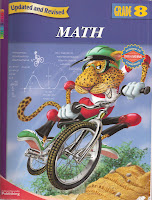
This is a plug for School Specialty Publishing’s Spectrum math books, which we have been using as our main math texts for two years. Aligned to state and national standards, they provide clear, step-by-step explanations of math concepts, along with worksheets and tests. For students who wish to go beyond pre-algebra, Rainbow Bridge Publishing’s Skill Builders books offer exercises in geometry and algebra. The Skill Builders books are only supplementary workbooks, however; they provide no explanation of concepts.
Wednesday, February 2, 2011
Blast from the past

Documentary filmmaker Ken Burns says studying history doesn’t have to be “a dose of castor oil.” Yet this is what history studies felt like when I was in school in the 1970s. It was one of my least favorite subjects. The teacher would sit at a desk at the front of the room as members of the class would take turns reading aloud from the textbook. We might have a discussion and, occasionally, a creaky filmstrip. The class clock’s second hand seemed to sweep in slow motion. For homework, the teacher would assign the questions at the end of the chapter, which we would review during the next class. Would you believe, with all of the resources available today, that little in the pedagogy had changed when my daughter began studying history as a separate subject in sixth grade in the year 2008?
History is emerging as one of our favorite homeschool subjects. The textbooks serve merely as a launching point to other media and fun activities. The Internet provides access to museum websites, which often offer a host of free engaging activities for students. Artfully produced DVDs have replaced the temperamental and pedantic filmstrips. For example, the PBS “Liberty” series on the American Revolution is an insightful teaching tool for middle and high schoolers. Aside from expert commentary, all material is drawn from actual historical accounts. The website, www.pbs.org/ktca/liberty, provides interactive features, including a Road to Revolution game. Even if you can’t afford to purchase the DVD set, you can avail yourself of the free information on the website. Likewise, the Colonial Williamsburg website, http://www.history.org/, offers myriad educational materials, including interactives for students.
Our textbook, U.S. History: People and Events 1607-1865 by George Lee, summarizes important events in a bare-bones way; alone, it cannot do an adequate job of teaching history. To its credit, it supports national standards and poses some interesting questions for discussion. The teacher resource book, Highlights in American History: From Its Beginnings to 1850 by Grace Kachaturoff, provides suggestions for activities geared to different types of learners: draw a political cartoon, role-play a resident of one of the colonies, keep a journal of your life as a colonist, make a chart comparing and contrasting life in the North and South. These can make history more meaningful for the student. The book also suggests supplementary reading and topics for further study.
Take advantage of all you can to make history come alive in your homeschool classroom. And don’t pass up visits to nearby historical sites and museums. These field trips provide an opportunity for enrichment, as well as a break from the classroom. With all the resources available to history teachers, the subject shouldn’t be boring.
Allegra's take: The best way to keep students engaged in history lessons is to take the multi-media approach. Reading from a textbook alone can be dull indeed. The “Liberty” series from PBS is chock-full of great historical accounts and factoids, and the narrative is so engaging that at times I thought I was watching an adventure film. The series, which is divided up into manageable one-hour episodes, can be watched part by part without the story being interrupted.
As far as textbooks go, U.S. History: People and Events 1607-1865 and Highlights in American History: From Its Beginnings to 1850 are fine. The interesting, hands-on activities provided by the latter are good for those who need more than just reading to absorb material. I especially enjoyed the creative writing activities, such as writing letters and journal entries from the perspective of early Americans. U.S. History: People and Events 1607-1865 provides great discussion-starting opinion questions after each entry, and, in contrast to the sweeping overviews of Highlights in American History, presents its information in smaller, focused articles. The discussion questions are sometimes difficult, but in an enjoyable way; they really make you think about and react to history rather than simply memorize it.
When learning about any period of history, American or otherwise, take some time to immerse your history classes in the era. If your student plays an instrument, find some sheet music from the time and give a “concert.” I’ve used Colonial Keyboard Tunes by J.S. Darling (available from Colonial Williamsburg) to play such songs on my piano. Try some crafts, recipes or other activities appropriate to the time being studied. Plimoth Plantation’s web site (http://www.plimoth.org/) provides authentic 17th-century American recipes. Students can apply their own interests or hobbies in the classroom, most likely, and make the lessons more meaningful.
Thursday, January 6, 2011
Literature of geometry

My daughter insists she hates math. But she likes geometry. Is it because we’ve integrated the reading of Flatland: a Romance in Many Dimensions by Edwin A. Abbott, in which the author offers social commentary in geometric terms? In Flatland, as Abbott’s imaginary society is called, the women are represented by line segments, the lowest order. Irregular male figures are also relegated to the lowest levels of society or destroyed. Equilaterals are respectable. Regular polygons are elite. Circles represent the pinnacle of society. Abbott’s short novel is a bit dry, yet it has succeeded in engaging a young literary-minded student in math. If you can’t find the book through your local library, Dover Publications offers an inexpensive paperback edition. Dover also offers affordable geometric figures coloring/activity books that can help visual/tactile learners better grasp geometry concepts, such as congruency, similarity and surface area.
Allegra's take: Fictional stories that incorporate subjects being studied in the classroom are an excellent way to introduce otherwise uninteresting topics to students. Often, if a student enjoys the story, he or she will want to find out more about the concepts mentioned. All subjects, from math to science to history to foreign language, can incorporate literature into the curriculum.
Thursday, December 30, 2010
Learning to fly

As with all teachers, I’m grateful for this week-long winter break--to regroup and to plan lessons. Our final year of middle school, and therefore homeschool, presents a growing challenge for me. I find my daughter’s insatiable quest for knowledge exhausting. According to age, Allegra is in grade 8, but in reality, she is working well beyond grade level in most subjects. She recently “shadowed” a student at a well-regarded local charter high school to see if she might like to attend next year and discovered that she is covering at home the same material as the school’s advanced 9th-grade math class. In English, we are working at a high school Advanced Placement level. In fact, I’ve given Allegra the same material I, in a previous life, assigned to college freshmen and sophomores. She’s not any more “exceptional” than other bright students with whom I’ve worked, just exceptionally motivated. I imagine many serious homeschool students are working ahead of their peers in public school because they can learn at their own pace, rather than in lockstep with an entire classroom of varied ability and motivational levels. For an excellent study on how the nation’s public schools may be holding back bright students, see http://www.nationdeceived.org/. The study suggests that the current egalitarian approach to education, with its fanatical emphasis on mastery of basic skills, is actually being unfair to high-ability students. When students are ready to fly, educators shouldn’t clip their wings, leaving them to wallow in a pool of mediocrity.
Wednesday, November 10, 2010
Can you spell that?

Some might argue that, with dictionaries and spell-check software, teaching spelling is unnecessary. By the same token, one could also argue that calculators render the teaching of math obsolete. Times have changed, but what hasn’t changed is what marks someone as literate. The ability to spell is one of those indictors.
I tend to agree that the old-fashioned spelling test often doesn’t accomplish much: words learned for the quiz are usually here today, gone tomorrow. Only reinforcement moves information from short-term to long-term memory. Context helps, too.
We’ve found a great resource, produced by Mark Twain Media, called Spelling Puzzles, which teaches not only spelling but also synonyms and antonyms, prefixes and suffixes, foreign words and more through the use of word scrambles, crossword puzzles and word searches. In the process of completing the puzzles, students will find they’re learning useful vocabulary: art terms such as “encaustic” and “caricature,” science terms such as “hypothesis” and “osmosis,” geography terms such as “isthmus” and “strait.” This book teaches spelling in an enjoyable, meaningful way.
Allegra's take: Spelling Puzzles is intended for grades 6 through 7, and many of the activities are a bit too simple for older students. However, the vocabulary it presents is advanced, making the book also suitable for 8th graders. These words can seem intimidating on a traditional spelling word list, and the puzzles provide an easier path to learning them. Students beyond the 6 through 7 grade level might feel a little awkward doing word searches and crosswords at first but will soon find that they are using difficult spelling words easily.
Saturday, October 23, 2010
Theory vs. practice

One of the benefits of homeschooling is the ability to shift gears when the educational engine isn’t running smoothly. Case in point: French. Allegra isn’t really into French, which is the language she began studying in sixth grade at public school, but it’s the only foreign language I can teach. She wants to study Latin when she enters a brick-and-mortar high school next year. Meanwhile, we continue to study le français as I research online Latin courses.
I suggested we drop French entirely because it’s not a requirement, but Allegra believes she needs some foreign-language education. Our text, The Ultimate French Review and Practice with CD-ROM by David M. Stillman, Ph.D. and Ronni L. Gordon, Ph.D., is designed for advanced beginners, but its approach is too academic for this 13-year-old. On the other hand, Allegra finds the Easy French Reader by R. de Roussy de Sales completely accessible but not always interesting.
On a whim, I purchased three children’s picture books by Brigitte Weninger about an endearing young rabbit named Fenouil. These Allegra LOVES. Fortunately, the series consists of several books. And while they are children’s books, the vocabulary is quite challenging to anyone unfamiliar with French idiomatic expressions.
It’s worth remembering that, although middle schoolers may be capable of advanced academic work, they remain children in many ways. That’s why K-8 academic models tend to be more successful than middle-school models that mimic high school. So, for French studies, we continue to use The Ultimate French Review and Practice for grammatical exercises, but for reading comprehension, we use children’s books. Merci, Fenouil, for returning the magic to learning a foreign language.
Allegra's take: The adventures of the adorable Fenouil truly saved my interest in French. The stories are simple enough to avoid too much confusion in comprehension, and the advanced vocabulary offers valuable expressions not found in every textbook. While not directly contributing to the learning experience, the series illustrations by Ève Tharlet always serve to brighten up the day.
The Easy French Reader has both easy fiction and more difficult historical essays. In terms of entertainment, I enjoyed the fiction section, "Marc et Julie," more. Middle schoolers will enjoy following the “soap opera” of the two teens in France and learn basic vocabulary and grammar as they go. While they could be a bit dry, the historical pieces made an excellent link to our history studies last year.
I suggested we drop French entirely because it’s not a requirement, but Allegra believes she needs some foreign-language education. Our text, The Ultimate French Review and Practice with CD-ROM by David M. Stillman, Ph.D. and Ronni L. Gordon, Ph.D., is designed for advanced beginners, but its approach is too academic for this 13-year-old. On the other hand, Allegra finds the Easy French Reader by R. de Roussy de Sales completely accessible but not always interesting.
On a whim, I purchased three children’s picture books by Brigitte Weninger about an endearing young rabbit named Fenouil. These Allegra LOVES. Fortunately, the series consists of several books. And while they are children’s books, the vocabulary is quite challenging to anyone unfamiliar with French idiomatic expressions.
It’s worth remembering that, although middle schoolers may be capable of advanced academic work, they remain children in many ways. That’s why K-8 academic models tend to be more successful than middle-school models that mimic high school. So, for French studies, we continue to use The Ultimate French Review and Practice for grammatical exercises, but for reading comprehension, we use children’s books. Merci, Fenouil, for returning the magic to learning a foreign language.
Allegra's take: The adventures of the adorable Fenouil truly saved my interest in French. The stories are simple enough to avoid too much confusion in comprehension, and the advanced vocabulary offers valuable expressions not found in every textbook. While not directly contributing to the learning experience, the series illustrations by Ève Tharlet always serve to brighten up the day.
The Easy French Reader has both easy fiction and more difficult historical essays. In terms of entertainment, I enjoyed the fiction section, "Marc et Julie," more. Middle schoolers will enjoy following the “soap opera” of the two teens in France and learn basic vocabulary and grammar as they go. While they could be a bit dry, the historical pieces made an excellent link to our history studies last year.
Subscribe to:
Posts (Atom)